
In humid Indian weather, foundation fails in a predictable order: shine appears on the nose and forehead within an hour or two, the base starts to separate around the nose and chin, and by evening it has either slid off or turned a shade darker. A natural-looking base can last through a humid day, but only if every step is built for moisture and oil. This is the full tutorial: prep, primer, the right formula, thin layering, setting, touch-ups, and how to adapt it for coastal humidity, monsoon and long outdoor events.
Why does foundation slide off in humidity?
- Sweat and oil mix with the base. Liquid foundation sits on top of skin; once sweat and sebum build up underneath, the film breaks and slides.
- Thick layers have nothing to grip. A heavy layer holds more moisture and moves as one sheet.
- Damp skin before you start. Applying on warm, damp skin traps moisture under the base from the first minute.
- Too much moisturiser or a slippery sunscreen. A rich layer that has not settled acts like a slip between skin and foundation.
- Darkening. As skin oil mixes into the base, some foundations look a shade deeper, which looks like the base has "gone patchy".
The long-wear foundation routine at a glance
| Step | What to do | Time |
|---|---|---|
| 1. Cool down | Wash, pat dry, sit under a fan or AC until your face stops feeling warm | 3 to 5 minutes |
| 2. Light hydration | A thin gel moisturiser, then sunscreen; let both settle | 2 to 5 minutes |
| 3. Blot | Press a tissue on the T-zone to lift excess | 10 seconds |
| 4. Prime | Primer on the T-zone and around the nose | 1 minute |
| 5. Thin first layer | Pea-sized amount of a long-wear or matte base, stippled in | 2 minutes |
| 6. Wait | Let the first layer set before adding more | 1 to 2 minutes |
| 7. Spot second layer | Only where you need more coverage | 1 minute |
| 8. Conceal | Small amounts, tapped in | 1 minute |
| 9. Set | Press powder on the T-zone, around the nose and under the eyes | 1 minute |
| 10. Lock | Setting spray, then let it dry without fanning | 1 to 2 minutes |
Step 1 to 3: prep for humidity
- Cool your skin first. Wash with a gentle cleanser, pat dry, and wait until your face feels cool to the touch. Starting on warm, damp skin is the most common reason base slides early.
- Keep hydration light. Use a thin gel or lotion moisturiser rather than a rich cream. Apply sunscreen as your last skincare step and give it a few minutes to settle before makeup.
- Blot before you begin. Press a tissue onto the forehead, nose and chin to lift any slip left on the surface.
Step 4: prime where you get oily
Primer gives foundation something to grip. In humid weather you rarely need it all over the face; focus on the T-zone, the sides of the nose and the chin, where oil appears first. Pat it in with a fingertip and let it dry for about a minute.
Step 5 to 7: choose the right base and build it thin
| Your skin in humidity | Best base | Why |
|---|---|---|
| Oily, gets shiny by mid-morning | Long-wear matte liquid or cream-to-powder | Controls shine and grips better |
| Combination | Natural-matte liquid or BB foundation | Light enough for cheeks, set the T-zone only |
| Dry even in humidity | BB foundation or a natural finish | Matte formulas can cling to dry patches |
| Want minimum product | Spot concealer only | Less product means less to slide |
How to apply: start with a pea-sized amount for the whole face. Dot it on the centre of the face and stipple (press and bounce) outward with a dense brush or a sponge rather than wiping. Stippling pushes product into the skin instead of leaving a film on top. Wait a minute or two, then add a second thin layer only where you need more coverage, such as around the nose or over pigmentation.
Sponge tip: in very humid weather, use the sponge only slightly damp, squeezed out well. A soaking-wet sponge adds moisture you are trying to avoid.
Step 8: conceal in small amounts
Tap concealer only where you need it: under the eyes, around the nostrils and on spots. Thick concealer under the eyes creases fastest in heat, so use two small dots per eye and blend with a fingertip, whose warmth helps it melt in.
Step 9: set the areas that move
- Press, do not sweep, a small amount of powder onto the forehead, nose, chin and under the eyes.
- Leave the high points of the cheeks unpowdered if you want a natural glow.
- For long events, set the under-eye with a little more powder, wait a few minutes, then brush off the excess.
Step 10: lock it with setting spray
Hold the bottle about an arm's length away and mist in an X and then a T across the face. Let it dry on its own; fanning or blotting straight away disturbs the layers. Setting spray will not stop you sweating, but it binds the powders and base so they break up less.
Products for this routine
Live prices from the Glohaze catalogue.
| Product | Price | Buy Now |
|---|---|---|
| Liquid Illuminating Primer | ₹150 | Buy Now ↗ |
| 2-in-1 Foundation + Concealer (24Hr Matte) | ₹250 | Buy Now ↗ |
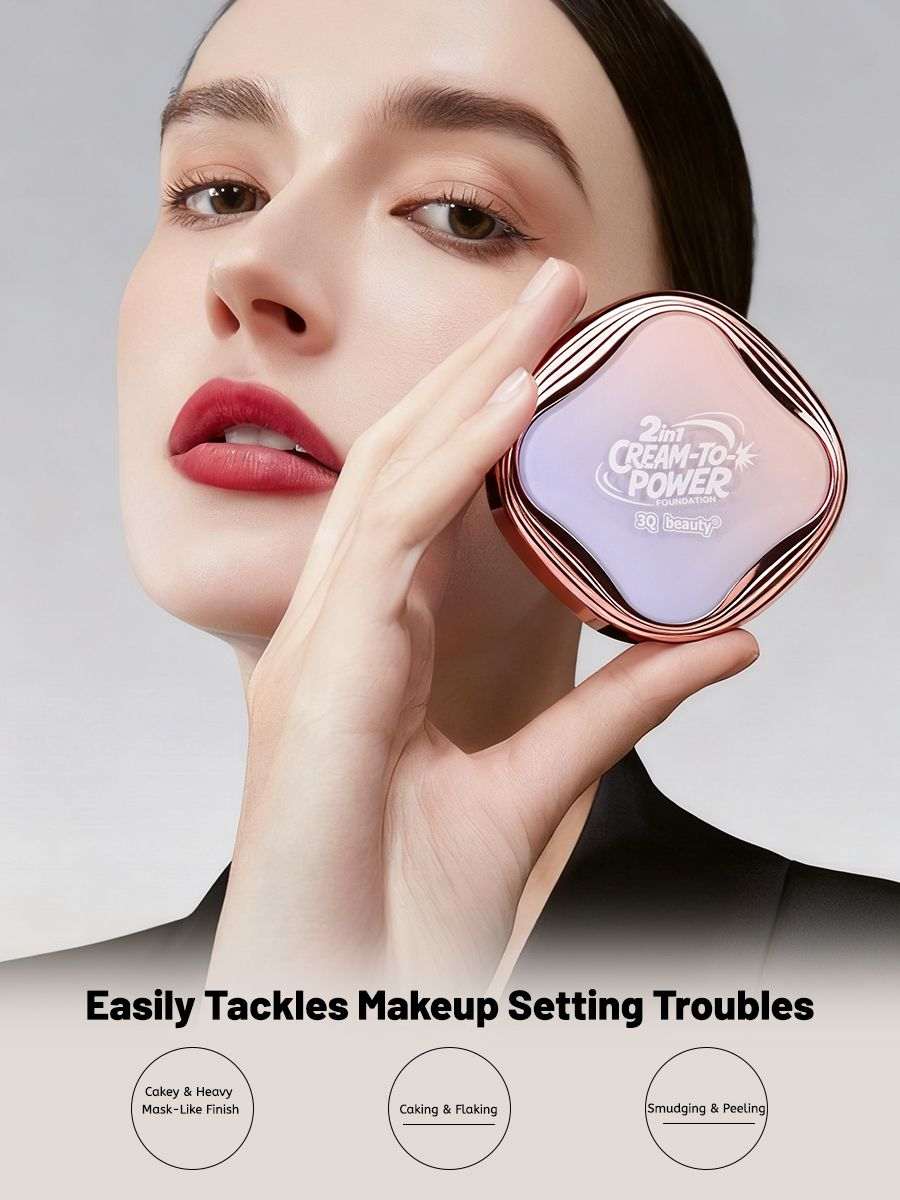
| 2-in-1 Cream-to-Powder Foundation & Compact | ₹260 | Buy Now ↗ |
| Liquid Concealer (Any 1 Shade) | ₹135 | Buy Now ↗ |
| Extra Thin Bristle Foundation Brush | ₹125 | Buy Now ↗ |
| Glitter Setting Spray (100 ml) | ₹280 | Buy Now ↗ |
| Total | ₹1,200 |
Prices checked October 20, 2026 from the Glohaze catalogue. Final price at checkout may differ.
How to touch up foundation in humidity
- Blot first. Press a blotting sheet or tissue on shiny areas. Do not rub.
- Fix any breakup. Pat the edges back with a clean fingertip or sponge.
- Powder lightly, only on the T-zone, after blotting.
- Re-mist with setting spray if you have it with you.
The most common mistake is adding powder straight on top of sweat, which is what makes a base look cakey and patchy by evening.
Adapting the routine
| Situation | Change this |
|---|---|
| Coastal humidity (for example Mumbai, Chennai, Kolkata) | Skip heavy moisturiser, use matte or cream-to-powder, carry blotting paper |
| Monsoon | Go lighter overall, use waterproof eye products, avoid cream blush and all-over highlighter. See monsoon makeup tips |
| Dry heat (hot but not humid) | A natural or satin finish works; hydrate a little more and powder less |
| Long outdoor events and weddings | Prime the full T-zone, two thin layers, set the under-eye well, finish with spray, pack a touch-up kit |
| Office with AC all day | Natural finish, less powder; AC dries skin even when it is humid outside |
Why does my foundation turn darker by afternoon?
It is usually blamed on oxidation, but lab testing points mostly to skin oil: as sebum mixes into the foundation film, the base turns more see-through and looks darker, more so on oily skin and in heat. Sweat and light play a smaller part. Test new foundations on the jaw and check after 20 to 30 minutes, use primer as a barrier, and if a formula always deepens on you, pick the shade that looks slightly light at first. More on shade matching in our foundation guide for Indian skin.
Common mistakes
- Starting makeup on warm, damp skin straight after a shower.
- Using a rich night cream as a morning moisturiser.
- One thick layer instead of two thin ones.
- Powdering the whole face heavily, which looks flat and cakey.
- Re-powdering over sweat instead of blotting first.
- Fanning setting spray dry.
The short answer
To make foundation last in humid weather, start on cool, dry skin with a light gel moisturiser and settled sunscreen, prime the T-zone, stipple a pea-sized amount of long-wear or matte base in two thin layers, conceal in small amounts, press powder only where you get oily, and lock with setting spray. Blot before every touch-up and never powder over sweat. For the whole-face routine, including eyes and lips, read makeup that lasts in Indian heat and humidity.


