
Kajal is part of everyday life in India, from school mornings to weddings, and for babies in many families too. So it is worth knowing exactly where the risks are. The short version: a sealed, labelled cosmetic kajal from an identifiable brand, used and replaced properly, is a very different product from traditional, homemade or unlabelled kohl and surma, which can contain lead. This guide explains what regulators and eye doctors actually say, how to check a kajal before you buy it, and the habits that keep your eyes safe.
Why are people worried about kajal?
The worry comes from lead. Traditional eye cosmetics known as kohl, kajal, surma and al-kahal have often contained lead, usually in the form of lead sulphide.
- The US Food and Drug Administration warns that in traditional kohl products, lead, usually as lead sulphide, sometimes accounts for more than half the weight of the product. It names India among the places where kohl has long been popular, and it notes that the risks of lead exposure are especially serious for children.
- The World Health Organization lists some traditional cosmetics among the sources of lead exposure and states that no level of lead exposure is known to be without harmful effects.
That is why the question is not really "is kajal safe?" but "which kajal, and how is it used?"
What do Indian rules say about kajal?
India regulates kajal as a cosmetic, and the rules are specific:
| Rule | What it says |
|---|---|
| Cosmetics Rules, 2020, rule 39(6) | The use of lead and arsenic compounds for colouring cosmetics is prohibited. |
| Cosmetics Rules, 2020, Ninth Schedule | Kajal must meet the Bureau of Indian Standards specification IS 15154. Cosmetic pencils (IS 9832) have their own standard too. |
| IS 15154:2002, Kajal: Specification | Caps heavy metals (as lead) at 20 parts per million and describes kajal as mainly carbon black from vegetable sources. Packs must show a batch number and a "best use before" date. |
| Cosmetics Rules, 2020, rule 34 | Cosmetic labels must show a batch number and a "use before" or expiry date, and most packs must list ingredients in descending order. |
In other words, a kajal sold legally as a cosmetic in India should not be coloured with lead. The risk sits mainly with products that do not follow these rules: loose, homemade, unlabelled or informally imported kohl and surma.
Cosmetic kajal vs traditional kohl and surma
| Sealed cosmetic kajal | Traditional or homemade kohl, surma | |
|---|---|---|
| Form | Pencil or twist-up stick in sealed packaging | Loose powder, paste or homemade preparation |
| Label | Manufacturer, batch number, use-before date, ingredients | Often none |
| Standard | Must meet IS 15154 in India | Unknown |
| Lead risk | Lead colouring is banned under Indian rules | The FDA warns lead can make up more than half the weight of traditional kohl |
| Our view | Fine for adults when used and replaced properly | Avoid, especially for children |
Is kajal safe for babies and children?
Many families apply kajal to babies for tradition or to "protect" the eyes. Based on the regulators' warnings, the safest choice is not to put kohl, surma or kajal on babies and young children, and never to use loose, homemade or unlabelled products on them. The FDA specifically notes that the risks of lead exposure are especially serious for children. If you have used traditional kohl on a child and are worried, speak to your paediatrician, who can advise on whether a blood lead test is needed.
How to check a kajal is safe before you buy
- Is it sealed? Do not buy open, loose or refilled products.
- Is there a manufacturer name and address? You should be able to identify who made it.
- Is there a batch number? Required on Indian cosmetic labels and in the kajal standard.
- Is there a "use before" or expiry date? Do not use it past that date.
- Is there an ingredients list? Most packs must list ingredients in descending order.
- Does the price make sense? A branded product sold far below its usual price from an unknown seller can be counterfeit.
What eye doctors advise for everyday kajal use
Even a safe product needs safe habits. The American Academy of Ophthalmology and the FDA give clear advice for eye makeup:
- Apply outside the lash line. The AAO advises applying eye makeup outside the lash line, away from the eye, so it does not block the oil glands along the eyelid. Lining the base of the lashes gives a similar look to the waterline.
- Never share eye makeup, even with family or close friends.
- Never wet it with saliva or water to soften it.
- Replace it after three months, and throw it out immediately after an eye infection such as conjunctivitis.
- Remove it every night before sleeping.
- Stop using it if your eyes sting, water or turn red, and see an eye doctor if irritation continues.
Signs a kajal is not right for you
- Burning, stinging or itching soon after applying.
- Redness, swelling or a gritty feeling that lasts after you remove it.
- Frequent watering that drags the kajal into the under-eye.
- Small bumps along the lash line, which can be a sign of blocked oil glands.
Remove the product, stop using it, and see an eye doctor if symptoms do not settle quickly.
The kajal we list
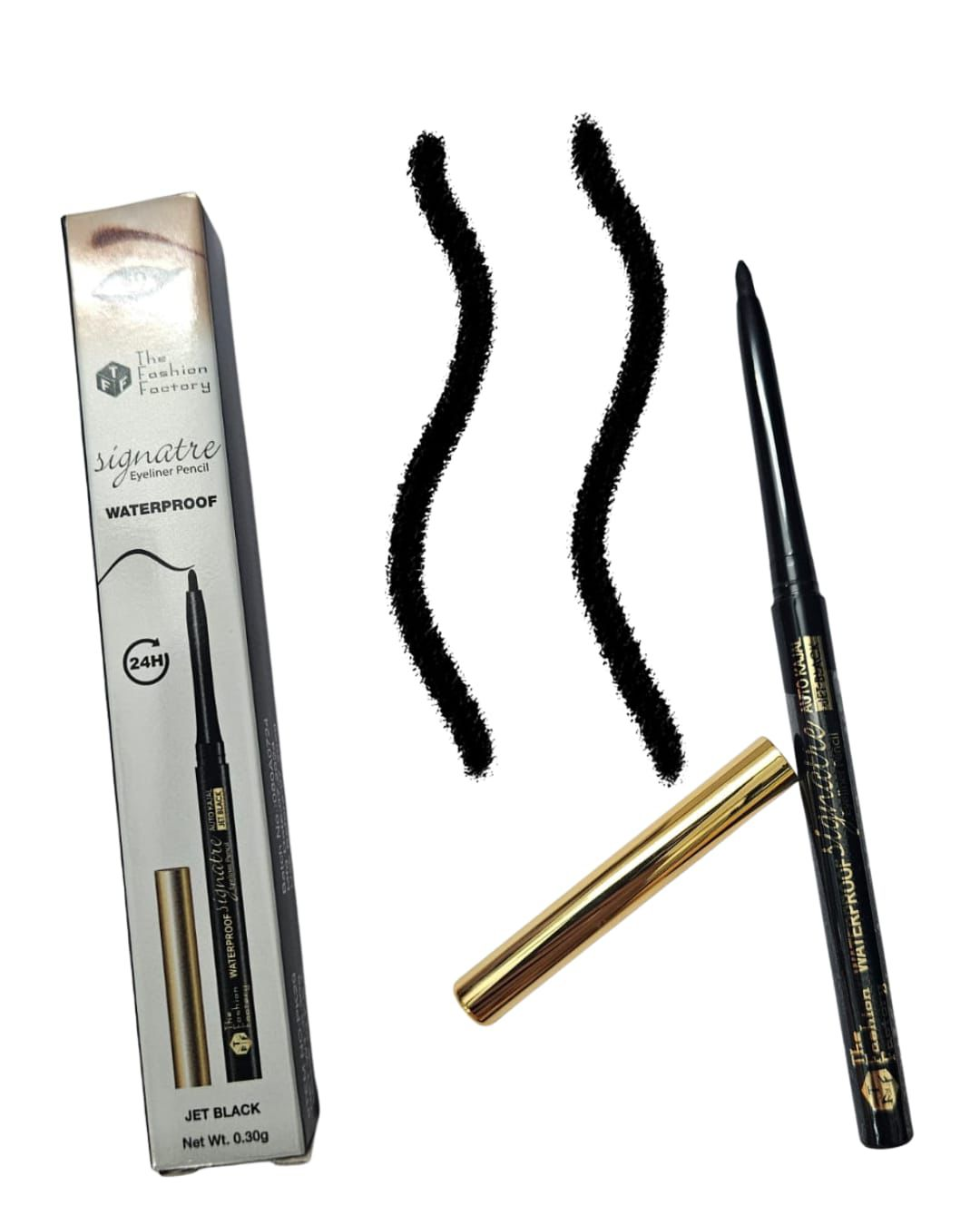
The Signature Kajal Eyeliner Pencil in our catalogue is a sealed, twist-up pencil. As with any kajal, check the batch number and use-before date on the pack you receive, and follow the habits above.
| Product | Price | Buy Now |
|---|---|---|
| Signature Kajal Eyeliner Pencil | ₹120 | Buy Now ↗ |
| Precision Eyeliner Pen | ₹155 | Buy Now ↗ |
Prices checked October 20, 2026 from the Glohaze catalogue. Final price at checkout may differ.
For application technique, read how to apply kajal perfectly. If your eyes water easily, see kajal for watery and sensitive eyes.
The short answer
A sealed, labelled cosmetic kajal is generally safe for adults when applied outside the lash line, never shared, removed every night and replaced about every three months. The real risk is traditional, homemade or unlabelled kohl and surma, which the US FDA warns can be more than half lead by weight. India bans lead colouring in cosmetics and requires kajal to meet IS 15154, so check for a manufacturer, batch number, use-before date and ingredients list, and avoid putting kohl or surma on babies and children.


