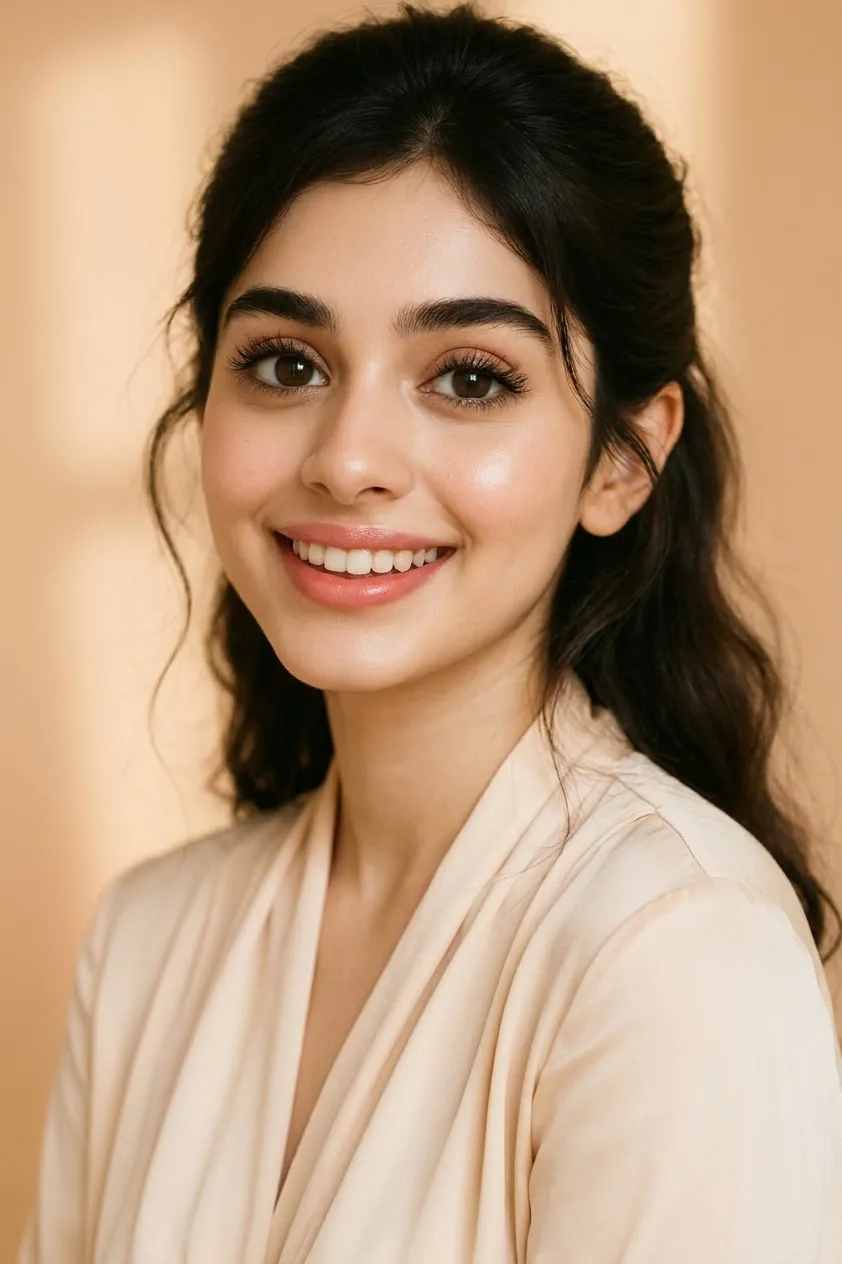
A new kind of beauty creator has arrived, one who never sleeps, speaks every language, and can be styled for any campaign in minutes. AI virtual influencers are no longer a novelty; they are a fast-growing part of how beauty gets marketed. We wanted to understand this shift properly, so we did two things: we studied the data, and we built one ourselves. Her name is Noor, and she is openly an AI creator.
The rise of the AI influencer
The virtual influencer market reached around 11.7 billion dollars in 2026 and is growing at more than 40 percent a year, according to independent industry forecasts. Brands are following the money: chief marketing officers are expected to move up to 30 percent of their influencer budgets toward virtual personas, and nearly nine in ten marketing teams now use AI somewhere in their influencer work.
This is not a Western-only story. India's creator economy is projected at over 15 billion dollars in 2026, and the country already has pioneering AI creators like Kyra and Naina, who have worked with brands from L'Oreal to Nykaa. Two or three names in a market of a billion people is not a crowded field. It is an open one.
Why beauty is leading the way
Beauty and fashion are where virtual creators perform best. Across the board, virtual influencer campaigns average engagement rates three to four times higher than human creators, and in the fashion category the gap is even wider. The reasons are practical: a virtual creator can demonstrate a product in perfect lighting, in several languages, in dozens of variations, all without a photoshoot. For a makeup brand, that is a powerful way to show a shade, a finish, or a technique.
The honesty problem
Here is the part most of the hype skips. A lot of that engagement is curiosity, not loyalty. People interact because the format is new. And in categories where authenticity is the whole point, real humans still win: sponsored posts by human creators can outperform virtual ones by a wide margin, and around 46 percent of consumers say they are uncomfortable with brands using AI influencers at all. India, where beauty advice is built on trust and word of mouth, feels this even more strongly.
That discomfort usually comes from one thing: not knowing. When an AI creator pretends to be human, and the audience later finds out, trust breaks. So the honest answer is not to hide the AI. It is to lead with it.
Disclosure is now the rule, and the advantage
In 2026 the Advertising Standards Council of India introduced draft guidelines requiring AI in advertising to be disclosed. Virtual influencers must carry a clear "AI-Generated" or "Virtual Persona" label on the content itself, with real penalties for brands that do not comply. Most projects treat this as a compliance cost. We see it the other way around. When the "is she real?" novelty fades, the creators left standing will be the ones who never played that game. Being openly AI is legal by default, and it turns the disclosure into part of the personality.
Meet Noor, our openly-AI creator
To test everything above, we built Noor from the ground up: an openly-AI beauty and makeup creator for India. She is early, a genuine experiment rather than a finished star, and that is exactly why we are sharing the work. A few honest lessons from the build, useful for any brand thinking about this:
- Consistency is the hard part. Keeping one face and one identity across dozens of images and videos takes a locked visual reference and careful, repeatable prompting, not lucky one-off generations.
- Natural beats glossy. Over-polished "AI-model" output reads as fake and performs worse. Real skin texture, relatable styling and a genuine Hinglish voice landed far better with the audience we care about.
- Disclosure did not cost reach. Labelling Noor as AI, exactly as the new rules require, took nothing away from her distribution and gave her a clear reason to exist.
- Posting can be automated; community cannot. Publishing scales with technology, but real conversation with real people still has to be human.
What this means for the future of beauty
We think the next two years bring three shifts. First, from face to system: the valuable thing is not a pretty AI face but a repeatable creator system, identity, voice, content engine and disclosure workflow together. Second, from reach to usefulness: as curiosity fades, the virtual creators that last will teach, demo and solve real problems, which suits beauty perfectly. Third, from hidden to honest: regulation and audience fatigue are pushing the whole field toward transparent AI, and the brands that embrace disclosure early will build the trust the format otherwise lacks.
Noor is our small, honest bet on that future. Openly AI, genuinely useful, and built to help you find your glow, whatever your budget.
Follow Noor on Instagram at @me.noormalik for affordable makeup tips, see her creator profile at glohaze.com/noor, and explore her real picks across the Glohaze store.